

Friday, December 19, 2025
SatisFactory's new AI-based semantic analysis model
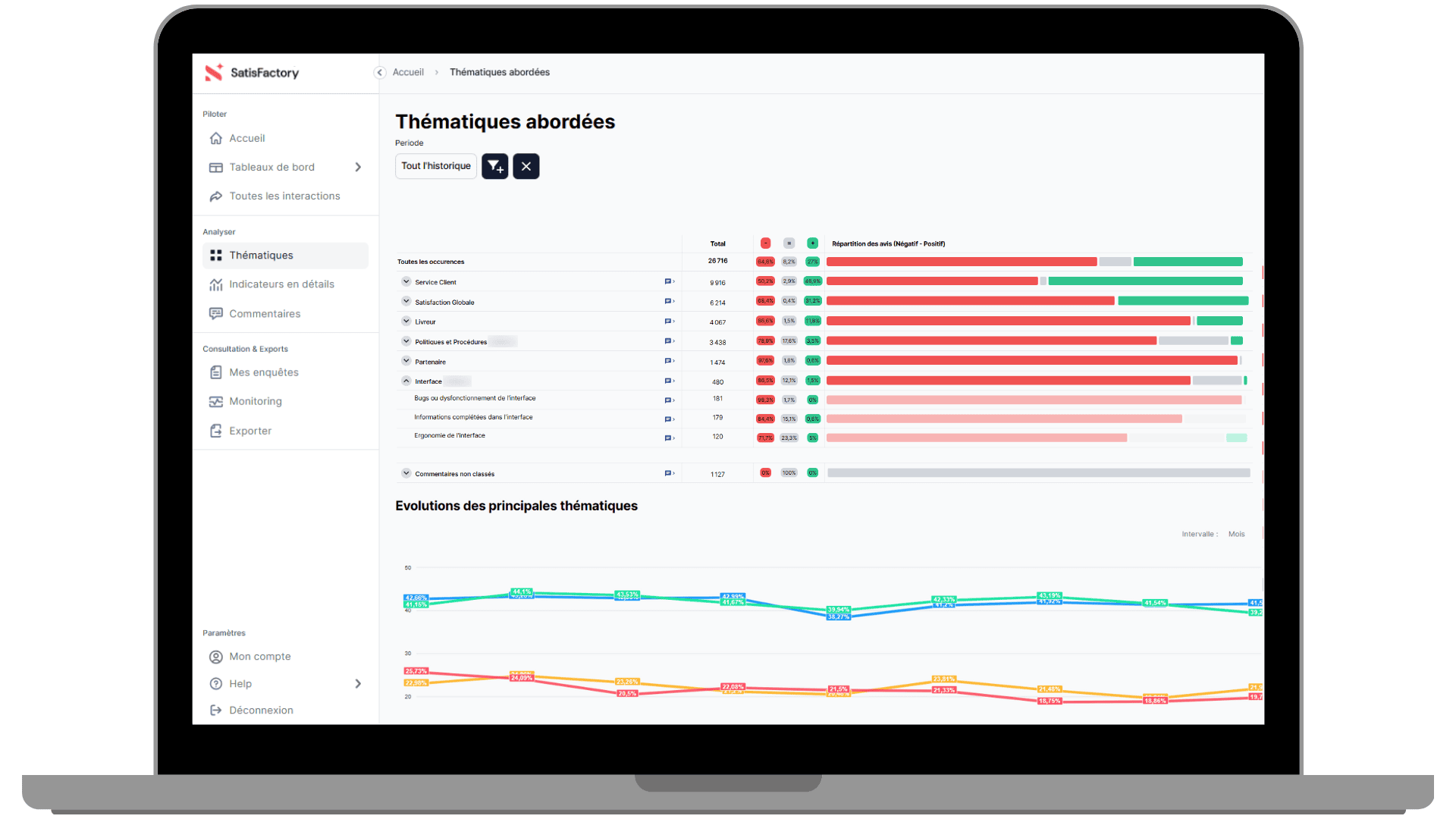
With its new internal semantic engine, the result of several months of development, SatisFactory is ushering in a new era in customer voice analysis. Thanks to Google's generative artificial intelligence, your analyses gain depth and reveal nuances, context, and weak signals that traditional approaches left in the shadows.
Semantic analysis to analyze customer comments and conversations
Semantic analysis(also known as "verbatim analysis") is an advanced natural language processing (NLP) method that can be applied in a feedback management context to comments collected from various sources. Its value lies in its ability to measure, group, and prioritize the topics mentioned by respondents, whether they come from satisfaction surveys, online review sites, or social media.
At the heart of this approach is the semantic classification plan(or classification plan), which structures the analysis and is defined in advance. It establishes the themes, sub-themes, and concepts expected in the verbatim transcripts, providing a coherent framework for transforming a large volume of raw comments into clear and directly actionable insights. This level of detail in the analysis makes it possible to categorize a single comment under several themes, depending on the richness of the topics it addresses.
The semantic analysis offered by SatisFactory therefore allows you to:
- Categorize each comment into one or more themes and sub-themes, based on the identified concepts.
- Prioritize identified customer expectations based on their importance and impact.
- Detect the polarity (positive, negative, neutral) associated with each concept discussed in the comments.
- Highlight persistent irritants, weak signals, and emerging trends
- Provide strategic and operational teams with a clear, structured, and directly actionable vision to guide their decisions.
Below is a comparison between the old and new semantic analysis models used by SatisFactory:
| Analysis model |
Old Sector-Specific Semantic Model by Keywords |
New Specific Semantic Model with AI |
|
|
|
|
| Type of analysis |
|
|
| Operation |
|
|
| Activation |
|
|
| Configuration |
|
|
Sentiment analysis, a key component of our semantic analysis, automatically assigns a polarity (or tone) to each topic addressed in a comment:
- Positive:The comment expresses a favorable opinion, satisfaction, or positive emotion about the subject.
- Negative:The comment expresses dissatisfaction, criticism, or a sore point on the subject.
- Neutral:The comment is factual, incomplete, or does not express any strong emotion.
The security of the new semantic engine
In terms of security, the new AI semantic analysis model is based on Google Gemini.

When using the artificial intelligence features of the SatisFactory platform, we guaranteemaximum confidentiality for your data. Our commitments are based on three pillars:
- Systematic anonymization of verbatim transcripts:Before any comments are submitted to artificial intelligence, prompts are automatically cleaned up and anonymized.
- Local data sovereignty:Data processing by generative artificial intelligence is carried out exclusively on French servers hosted in Paris.
- Limited use of data by our partner:Google formally undertakes never to use your data to train its models and never to share it with any third party.
To learn more about data security on the platform, please visit the SatisFactory Trust Page.
Calculating semantic tone
Presentation of semantic tone
Semantic analysis determinesthe sentiment of commentsby categorizing them into three tones:
- Positive tone
- Negative tone
- Neutral tone
This classification provides atwo-level analysis of sentiment.
- First,the comment is rated as positive, negative, or neutral in its entirety.
- Next, in addition to your semantic classification plan and overall reference to the tone of the comment,each sub-theme identified in the comment is assigned a specific tone (positive, negative, or neutral).
This comprehensive process covers all analysis needs, providing both a general assessment of the comment and a precise understanding of the sentiment associated with each topic mentioned in the respondent's feedback.
Explanation of semantic tone calculation
When semantic tone analysis is triggered for a comment, the following steps take place:
- Retrieval of the respondent's complete response
- Analysis of each rating left by the respondent (key indicators and satisfaction items/attributes).
- Identification and categorization of themes and sub-themes in the commentary (according to the classification plan defined on the platform)
- Assigning a tone (positive, negative, or neutral) to each sub-theme identified in the comment
- Overall classification of the tone of the comment (positive, negative, or neutral) based on the balance of tones for each sub-theme identified
⚠️ Comments that are too short (fewer than 3 words) are excluded from the tone calculation and areclassified as neutral by default.
💭 Todetermine the overall tone of a comment:
- If the number of negative sub-themes is greater than or equal to the number of positive sub-themes,the overall tone is classified as negative.
- Similarly, in the event of a tie between sentiments in the identified sub-themes (as many negative or positive as neutral),the strong tone (positive or negative) takes precedence over the neutral tone.
Enable the new semantic analysis engine
The activation of the new AI-specific semantic model is very quick, led by a dedicated Customer Success Manager and carried out in collaboration with you to ensure it is tailored to your needs.
A few hours after activating the semantic model on the platform, semantic analysis is available to all users.This advanced analysis, customized to your context, is also integrated across many other SatisFactory features to enrich your analyses and facilitate decision-making.
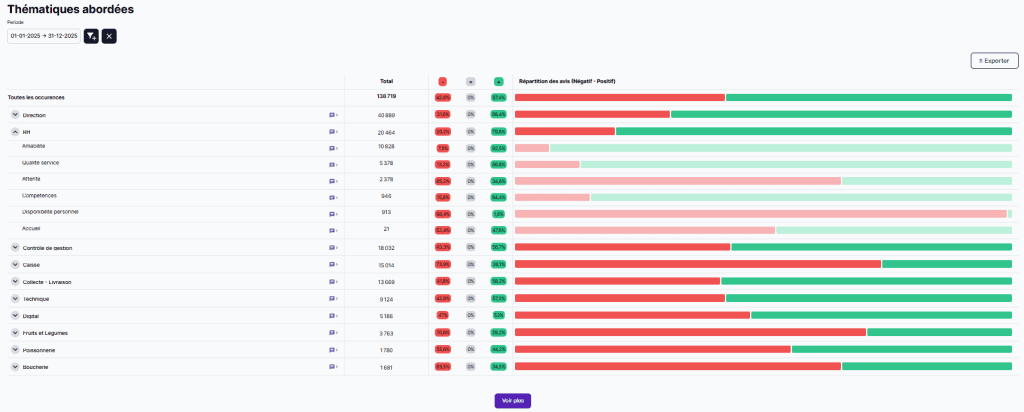
Are you interested in discussing our AI-powered semantic solution and would like to learn more?
Contact us


